
Accessible Home – Brighton
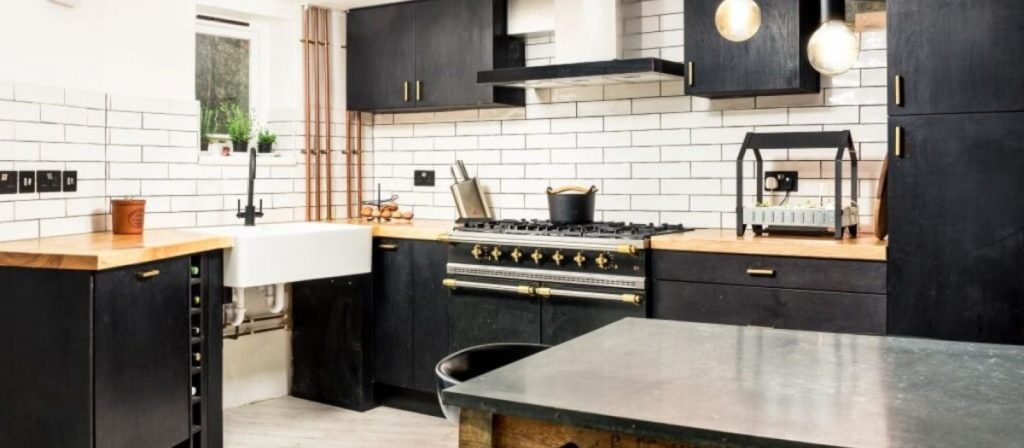
We designed this accessible home in collaboration with the contractor and their client, a wheelchair user. We worked to create an open plan home that met her needs and the building regulation requirements for fire compartmentation in this small four-storey terrace. Right from the start we had to reduce the floor height in the main entrance and add steels to support the new floor, which leads on to a lift enabling our client to access every level. We are very proud of this project and were nominated finalists in two categories at the LABC awards, gaining a ‘Highly Commended’ award for it.
Luxury Refurbishment – Kensington
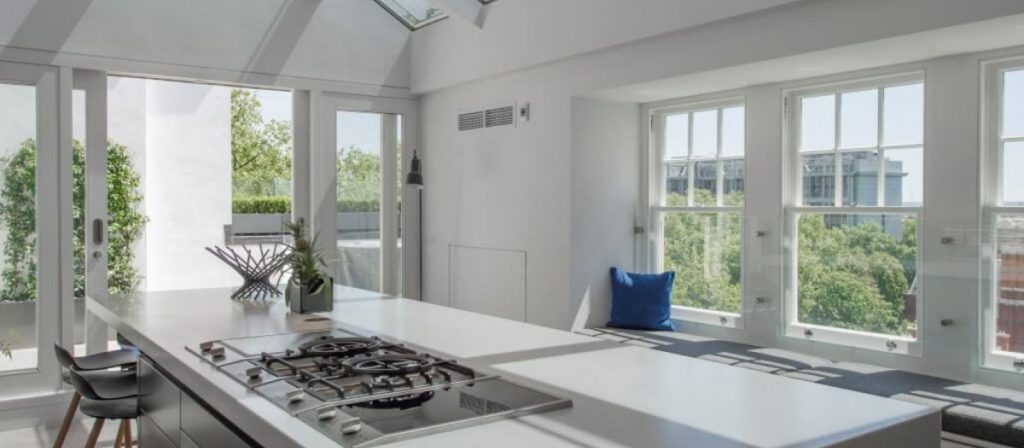
The project involved a full strip out and redesign of the existing layout to create a simple beautiful apartment for the client. As part of the design, we were asked to specify specialist acoustic treatments for many of the walls. This was required to isolate the rooms and provide peaceful environments for the occupants, keeping the noise of London out and the clarity of sound inside, to aid the client’s passion for music production. Revised room layouts were developed to maximise the spaces and create more of a gallery experience walking through the property. Light and space were important considerations for both ourselves and the interior designers. We also performed the complex task of coordinating the needs of various parties – some of whom were based abroad – ensuring the freeholder, solicitors and other tenants were happy with the works, as well as Planning and Building Control departments. Photos of the luxury refurbishment by Khaled Kassem & Cityzen.
Brighthelm Centre – Brighton

The Brighthelm Centre in central Brighton comprises a church, event space, cafe and offices. Cityzen were brought in to assess and fix their heating and ventilation systems; the boilers were old and falling over, the ventilation system didn’t seem to work and clients were complaining about being cold. The first thing we did was find out what was there and establish what was going on. The building was running four boilers, two of which would fail intermittently (these had been installed in the mid-80s, so they had been running for 25 years). The ventilation system in the roof and service risers was a minefield, which no one seemed to understand; initially we took three carrier bags of historic drawings away (over 200 drawings in the end, including superseded versions), scanned and collated them to understand the original designer’s layouts. Once that was done, we went back to site and checked the original design intent – what was actually on site – as inevitably things had changed, been moved, upgraded and removed. Most of the ventilation ductwork was in a usable condition but the rubber seals had perished and most of the motor control actuators had died, were broken or been removed. Our client had noted there had been some historic issues with the ventilation which no-one ever fixed. We also noted that the flow and return marked on the drawings and ductwork did not correspond to the way the system was working; subsequently the controls were fighting each other! Quite a simple game of ‘follow the flow’ flagged the error – why no-one had found this in over 20 years we’ll never know. The existing boilers were stripped out and replaced by a Vaillant EcoTech modular commercial system over the summer. Removing the old cast iron ones wasn’t a simple or clean task; the plumbing team did a great job without causing too much stress for the tenants of the building. The plant room was cleaned down and reconfigured for the new heating system (boilers, low loss header, plate heat exchanger and pipe circuits) to make the space easier to work in and control. All this work was done in 2015 and we’re very happy to report that a 21% reduction in gas usage was achieved in 2016, rising to a 40% reduction in 2017! Of course, there are various factors in play here: external weather, more improvements to the fabric of the building, etc. But we can say with certainty that our client now has a more efficient heating system which is working as it should with improved controls. A knock-on effect of these works alongside other building improvements is that Brighthelm has a higher occupancy and happier tenants within their building.
Discovery Centre – Combe Valley

Cityzen was approached by QED and their client, Groundwork South, to develop an open site to provide a recreational and educational centre. The building was developed from 3 single use 40 foot containers. The containers were converted to provide office, communal activity and meeting spaces. Cityzen took the concept and detailed the project to meet the client’s specification and Building Regulations. We undertook both the architecture and M&E design, then provided the manufacturers with the designs to speed up the offsite build. Once on site, we worked with Adenstar, ISOspaces and Cargotek to ensure the building services, ground works and the units met the clients specification and issues that arose on site. For more information, read about the project on the QED website.
Solar Arrays – Brighton and Hove

We assisted Brighton Energy Coop with their planning submissions, providing design advice and consultancy to enable them to install a number of arrays around Brighton & Hove. They are funded via community shares, and aim to give their members a return on investment, with anticipated rises each year from the feed-in tariffs and sale of generated electricity. The systems are currently running at 10% above the predicted generation levels, which will increase their return on investment. We continue to support the Brighton Energy Coop and are looking to help them reduce carbon emissions across Brighton and Hove through community energy schemes.
Lutyens Country House – Berkshire

We were privileged to work on this double award-winning restoration. In 2015, RIBA South awarded the project a Regional Award & Conservation Award, stating: “The result is an exemplary conservation project carried out on an important architectural work. Attention to detail, including the use of a specialist Lutyens conservation architect, has been forensic. Through this meticulous attention to detail exhibited by everyone on the project, an important early 20th century work has been brought back to its former glory.” (RIBA Journal) Once a small farmhouse built around 1650, Sir Edwin Lutyens substantially extended this property (initially in 1906 and later in 1912). The country house was subsequently granted Grade I listed status. Lutyens also designed the gardens in partnership with Gertrude Jeykll, and these are listed in the Register of Historic Parks and Gardens of Special Historic Interest in England. However, different owners carried out a number of internal alterations to the house. Changes included the removal of balconies, fireplaces and chimney stacks, as well as subdividing rooms and moving a staircase. Therefore, the newest owners wanted to restore the whole site to the original designs where possible, and bring many of the buildings back into modern use. Our role was varied throughout the project. John originally started work on it under his previous employer, Pentangle. Architecturally, CAD drawings of the site and its many buildings were initially required. John then worked alongside Frances & Michael Edwards Architects (Lutyens/heritage architect), Moxley Architects (construction stage architect) and a myriad of other specialist designers (interiors, lighting and garden) to achieve coordination of all the elements. In terms of M&E, John designed all the building services, which needed to work around the Grade I Listed nature of the building: new mains power services, back up and small power to the buildings, security and CCTV, new heating systems to all the building, plumbing and ventilation. In addition to the main house, the works incorporated the refurbishment of a number of houses in the grounds, new outbuildings and the walled garden, providing special instructions for the tender stage. Overall lighting design was also part of John’s remit, together with designing the IT infrastructure (including fibre links) and arranging for new utilities to be routed to the site. John worked closely with the owners and design team for over 4 years, ensuring that the buildings functioned as designed, the heritage was retained and the owners achieved their goals for their home. Cityzen then came back on board in 2015, to help assess the project at various points in terms of sustainability, ensuring its energy use was appropriate. Before
Schools Upgrade – London

Most recently, we were part of the team developing an administration block and undercroft within the school, a project that included all mechanical and electrical services. We had a very tight brief to design and get contractors to change over boilers and install a new innovative lighting scheme. The development included a green wall, rainwater harvesting and LED lighting throughout. We also developed the BREEAM pre assessment and energy modelling. The new lighting scheme was required for an undercroft that linked one part of the school to another. The client wanted something fun and creative for this space, which could otherwise have become dark and oppressive. So the challenge was to develop a scheme that would not only light a dark utility space, but also inspire its users: staff, school children and parents. Budget and time constraints added to the pressure of getting the right solution installed and tested within a two week period over the Easter holidays, so it would have been easy to just use a standard lighting design. Innovation was key to this project, both in terms of the layout and design. A cost-effective design for the undercroft was proposed, which used timber strips that created angles. This provided the perfect opportunity for Cityzen to design a randomised lighting pattern. The lighting scheme utilises LED strips in a broken pattern within aluminium channels between wooden slats, together with colour change LED strips at the top of each column. The scheme makes use of sensors and controls to ensure the system only runs when required, lowering overall running costs. The colour change is controllable via a phone app and wall-mounted controllers, allowing school staff to control the atmosphere themselves as required. On another occasion, we were asked to design and oversee the installation of a large PV array, to help the school cut their base load running costs and their carbon emissions. This has helped the school with their commitment to reduce their impact on the environment and gives them a practical and educational discussion piece, which will leave a lasting impression on the children. Initially, we were approached to help with a new substation connection, mains upgrade and new metering. This was required due to the gradual expansion of one of the schools and old electrical services tripping. We designed, procured and oversaw the works. Schools require all their works to be done out of hours and in school holidays, therefore they have to be planned and carried out within strict timeframes as well as budgets. The works were performed over a three week Christmas break period, and included a very tight schedule of ground works, electrical works and redecoration to ensure the school would be open for the first day of term.
Container Housing – Brighton

This project was developed by WCEC architecture and QED developments for Brighton Housing Trust (BHT). We were invited to help as we have experience with container buildings and knew all the parties involved. We fed into the planning and building control submissions to ensure the scheme met all the criteria set down by the Council. The provision of 36 container units would provide additional accommodation for BHT as part of their housing portfolio, helping people from all walks of life get into housing which they may have not been able to do otherwise. Planning consent was granted for a five-year period for Richardson’s Yard, at which point the project can be relocated to another site. We’re thrilled to have been able to donate our time to such a worthwhile project.
Low Carbon Strategy – Southern England

We captured data about the carbon efficiency of Southern Co-op buildings to help the retailer make informed decisions about its building portfolio. They are bound by the government’s CRC scheme to monitor and report its carbon and we are committed to helping them reduce their energy usage. Changes to the thermal performance of their buildings, lighting, heating, cooling and refrigeration can all make a difference to the way the buildings use energy and produce carbon. The remit of this project meant site surveys of 200 stores and funeral care buildings in a two-year period. An exciting challenge that we completed, giving us an insight into their building stock and enabling us to collate data from each site and map out a strategy for them. We used our survey data to produce benchmark information, services reports, capital expenditure information and renewables feasibility. This gave them informed choices about how each building within their portfolio is performing, and what the potential is for renovation or retrofit.